Salesforce Wasn't My Plan
What gets in the way [of good consulting], more often than technical gaps, is confidence. Junior consultants who know the right answer but won't say it because they're worried the client will push back. Experienced consultants who let clients take the wheel because confrontation feels risky.
But it became my professional anchor point.
When I was a 'tween' I thought I wanted to be a fighter jet pilot. Later I thought I was going to be a fulltime musician (I wasn't sufficiently talented or driven for that though).
In 2006, fresh out of secondary school in Copenhagen, I took a job in telemarketing. Not a vocation - just something to do. But I liked my manager, and when she moved to a pension company to build a new department, I followed her. I was 21, knew nothing about pensions or insurance, and had no particular plan beyond showing up.
I spent four years in that inbound customer service team. The path being laid out for me pointed clearly toward becoming a pension insurance salesperson. I hated that idea. What I actually liked - what kept pulling my attention - were the projects happening around the edges. IT projects, process improvement work, anything that involved finding a better way of doing something. My manager at the time noticed it before I did. "You have a natural propensity for project work," he told me. I didn't fully understand what he meant at the time. I think he meant that I couldn't help looking at broken things and wanting to fix them.
I became the department's unofficial techie, which later turned out to be rather useful.
The accidental BA
In 2010 I transitioned into the IT department as a newly minted business analyst. I wasn't entirely sure what a business analyst was. My first assignment was to help deliver a new Salesforce implementation for the sales team.
Nobody in the company had any Salesforce experience. We had no implementation partner. We were all learning by doing, which mostly meant learning by getting things wrong and trying again. It took two years to reach a beta release with twelve internal users, and another full year before we went live with a hundred. By most measures, it was a difficult project.
But two things happened during those three years that shaped everything that followed.
The first was that Salesforce clicked for me quickly. The technical side - the configuration, the logic of the platform - made intuitive sense in a way I hadn't expected. I went from writing user stories and drawing process diagrams to building workflow rules and validation rules, and I wanted to know more.
The second was that I got to watch two project managers work side by side, and they could not have been more different.
One became my mentor. She was a superb communicator, politically sharp, and completely comfortable calling people out when they were wrong - including upward. She had no interest in performing competence. She just had it.
The other taught me everything about how not to run a project. He was obsessed with appearing to be on top of things, especially in front of senior leadership. He couldn't challenge anyone above him, couldn't admit fault, and produced almost nothing of practical value despite talking constantly. He had confused looking capable with being capable.
I was in my mid-twenties, and I was watching those two approaches play out in parallel in real time. It stuck.
A detour through Nairobi
In 2013, I enrolled in a graduate diploma programme at the IT University of Copenhagen - a way of building some theoretical foundation under what had become a practical career. But before I could graduate, I needed a thesis subject.
In 2015, on a private trip to Kenya, I met people connected to an organisation called Human Needs Project, based in Kibera, Nairobi. They deliver clean water, vocational training, and various community services to one of the largest informal settlements in Africa. One of those services is microfinance - small loans and savings for over a thousand people, tracked at the time in a tangle of unstructured Excel sheets.
They heard I worked in IT. They were enthusiastic in the way that people are when they genuinely need help and haven't had much of it. I listened, asked questions, and told them I'd see what I could do.
A few months later I had a thesis subject. I got approval to use Human Needs Project as my case study, designing a new system to manage their microfinance operation. After I graduated, I kept going - voluntarily, remotely. I built the Salesforce solution, recorded training videos, iterated based on their feedback. The system went live in 2016.
They still use it today.
That experience - more than anything else - is why I work with nonprofits. Not as a brand positioning exercise, but because I had already seen what it looked like when a mission-driven organisation got the right tools and the confidence to use them.
London, and finding the right fit
By 2016, after a year managing the same Salesforce org week after week, I was restless. I still loved the platform. I just needed a bigger pond. London had more opportunities, so I moved (side note; I received my job offer the morning after the Brexit vote, literally on 24th June 2016 - talk about a weird omen!).
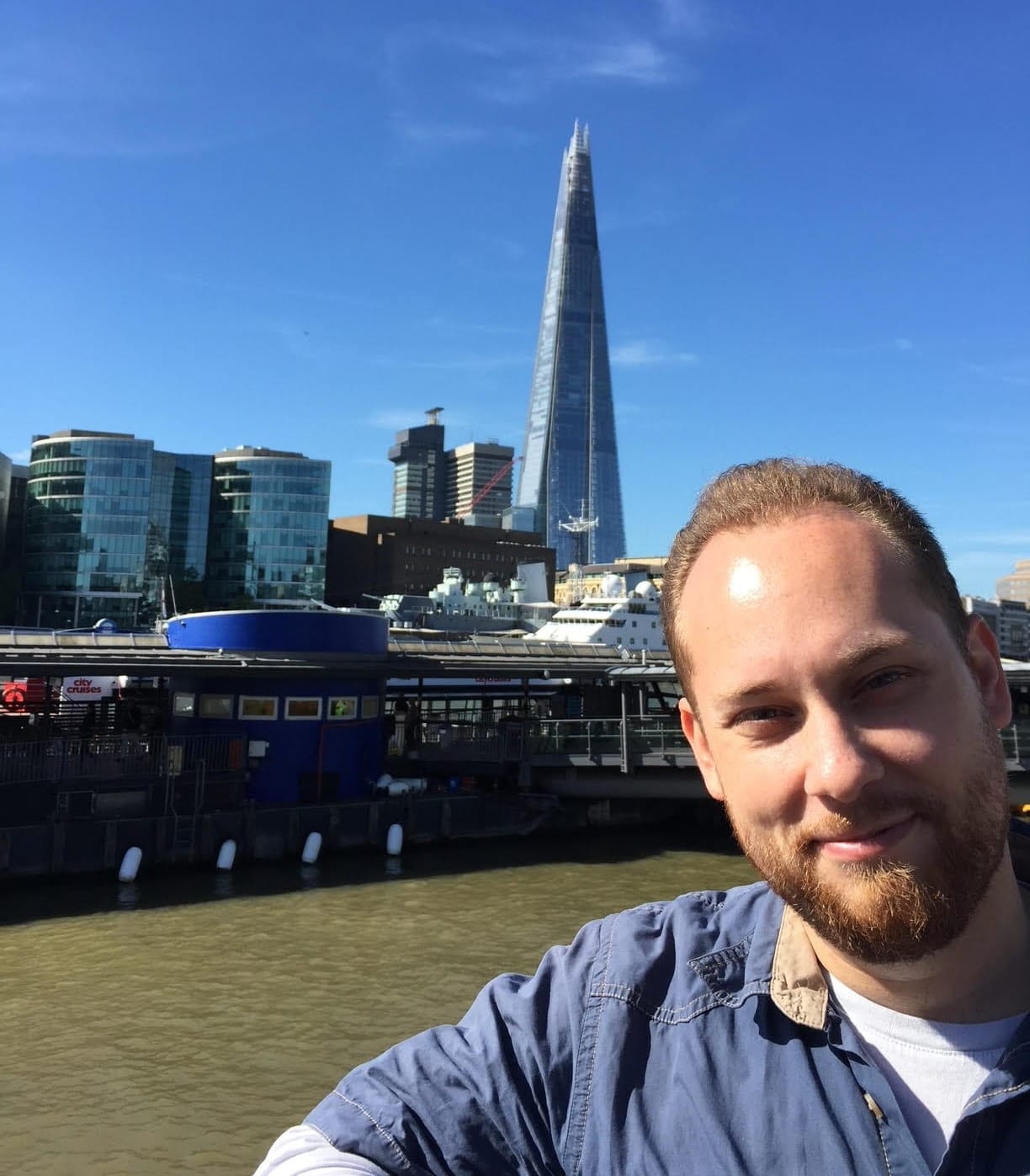
My first consultancy role didn't last long. The work was entirely commercial, the firm was heading into a large merger, and neither felt like somewhere I could build something meaningful. After seven months I left.
My team leader there - to her credit - recognised the mismatch before I did. She connected me with the managing director of Giveclarity, a Salesforce partner working exclusively with nonprofits. I joined in 2017. I've been there for nine years, and I'm genuinely happy there.
When someone names what they see in you
In my first annual review at Giveclarity, my line manager said something that I've carried since. "When you speak," she told me, "you speak with a certain authority, with gravitas - and it makes people pay attention."
I was 31. Still relatively green as a consultant. And it was the first time I properly understood that the way I showed up in a room was doing something - not just what I said, but how I said it.
It wasn't arrogance. It wasn't performance. It was just being clear about what I thought and saying it without apology.
That's what this site is about.
I've spent the years since leading implementations for organisations like Save the Children, UNICEF, and Médecins Sans Frontières - large, complex projects where the margin for error is real and the stakes matter. I've developed a fairly clear picture of what good delivery looks like, and equally clear picture of what gets in the way of it.
What gets in the way, more often than technical gaps, is confidence. Junior consultants who know the right answer but won't say it because they're worried the client will push back. Experienced consultants who let clients take the wheel because confrontation feels risky. The slow drift away from good practice because nobody wanted to be the one to hold the line.
I'm writing here because I want to push back on that drift - and because I think more people in this field are capable of holding the line than they currently believe.
If any of that resonates, you're in the right place.